
Introduction to Industrial Hygiene
Table of Contents
ToggleIn industrial manufacturing, cleanliness isn’t just about appearance—it directly impacts product quality, batch success, and patient safety. This becomes even more critical in pharmaceutical and biopharmaceutical plants, where even minor contamination can lead to batch rejection or regulatory issues.
From my experience in production environments, one thing is very clear:
“A well-designed cleaning system is just as important as the production process itself”.
That’s where Cleaning in Place (CIP) systems come into the picture. They allow us to clean complex equipment without dismantling it, saving time while ensuring consistent hygiene standards.
What is Cleaning in Place (CIP)?
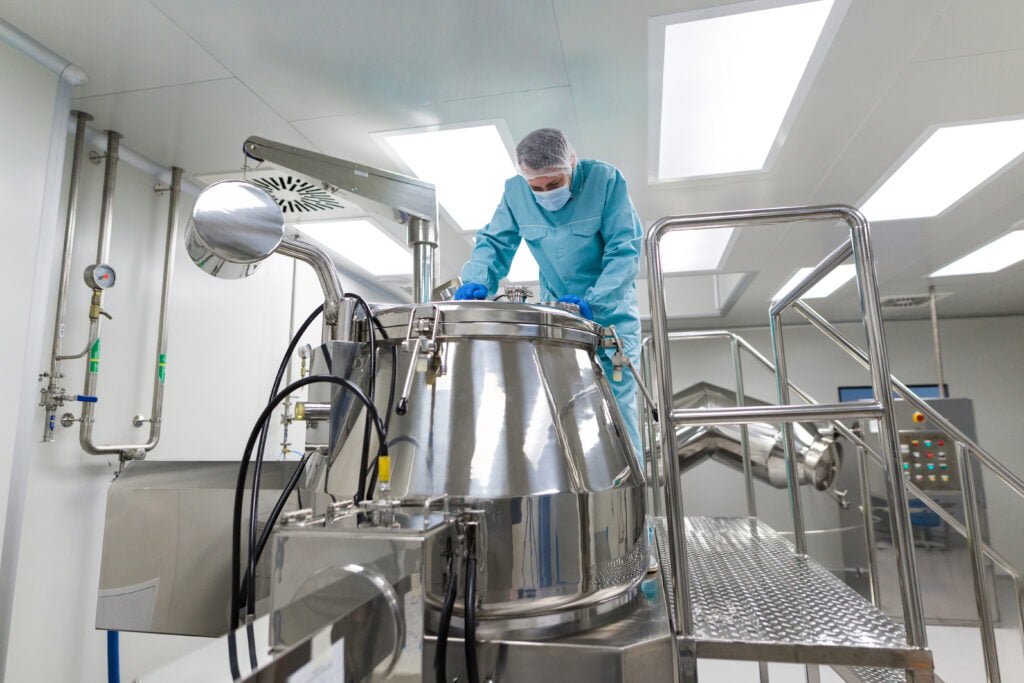
Cleaning in Place (CIP) is a method used to clean the internal surfaces of equipment—such as fermenters, pipelines, and tanks—without taking them apart.
Instead of manual cleaning, which is time-consuming and inconsistent, CIP uses a controlled circulation of cleaning solutions under defined conditions of flow, temperature, and concentration.
In real plant operations, this means:
- Less downtime between batches
- Reduced operator dependency
- More reproducible cleaning results
CIP vs SIP: What’s the Real Difference?
People often confuse CIP with SIP, especially during interviews or audits.
Here’s the simple distinction:
- CIP → Removes residues (cleaning)
- SIP → Kills microorganisms (sterilization using steam)
Both are essential, and in most pharmaceutical setups, they work back-to-back.
Why CIP is Critical in Modern Industries
In theory, cleaning sounds simple. But in practice, it’s one of the most sensitive operations.
Let’s take an example from biopharma:
If residues from a previous batch remain inside a fermenter or pipeline:
- It can cause cross-contamination
- It may affect product yield and purity
- Worst case, it leads to complete batch failure
That’s why CIP systems are not just helpful—they’re non-negotiable.
Some key benefits:
- Ensures GMP compliance
- Reduces human error
- Improves safety (less chemical handling)
- Enables faster batch turnaround
Understanding the Science Behind CIP
Cleaning is not just washing—it’s a combination of chemistry, physics, and engineering.
Types of Residues (Soils)
In industrial systems, residues generally fall into three categories:
- Organic residues
Proteins, sugars, fats (common in fermentation processes) - Inorganic residues
Salts, minerals, scaling (often from water or buffers) - Microbial contamination
Biofilms or microbial deposits
Each type requires a different cleaning strategy.
How Cleaning Actually Works
In real operations, cleaning happens through multiple mechanisms:
- Dissolution → Solids dissolve into liquid
- Saponification → Fats converted into soap (via alkali)
- Emulsification → Oils dispersed in water
- Shear removal → Flow physically removes deposits
If even one mechanism is weak, cleaning efficiency drops.
The Four Pillars of Effective Cleaning
In industry, we often refer to the TACT principle:
1. Mechanical Force (Flow Dynamics)
This is one of the most underestimated factors.
For proper cleaning:
- Flow must be turbulent
- Velocity should be at least 1.5 m/s
From experience, insufficient flow leads to:
- Dead zones
- Residue accumulation
- Failed cleaning validation
👉 Dead legs in piping are a very common issue.
2. Chemical Force
Chemicals do the actual breakdown of residues.
- Alkaline solutions (NaOH) → Remove proteins, fats
- Acids → Remove scaling and minerals
Choosing the wrong chemical is like using the wrong tool—you’ll waste time without results.
3. Thermal Force (Temperature)
Higher temperature improves cleaning efficiency—but only up to a point.
Too high temperature can:
- Denature proteins
- Make residues harder to remove
So, optimization is key—not just increasing temperature blindly.
4. Time
Even with perfect flow and chemistry, cleaning needs sufficient contact time.
In practice:
- Short cycles = incomplete cleaning
- Excessive time = resource wastage
Balance is everything.
Chemistry of CIP Cleaning Agents
Sodium Hydroxide (NaOH) – The Workhorse
In almost every plant, NaOH is the primary cleaning chemical.
Why it works so well:
- Breaks down proteins
- Dissolves fats and oils
- Works effectively at moderate temperatures
Typical usage:
- 0.5% to 2% concentration
In real operations, concentration control is critical—too low won’t clean, too high may damage equipment.
Acid Cleaning
After alkali cleaning, acids are used to remove:
- Mineral deposits
- Scaling
- Residual salts
Common acids:
- Nitric acid
- Phosphoric acid
Additives and Surfactants
These improve cleaning by:
- Reducing surface tension
- Helping chemicals reach all surfaces
- Preventing redeposition
The 6-Step CIP Cycle (Practical View)
A typical CIP cycle follows a structured approach:
1. Pre-Rinse
Removes loose material using purified water.
👉 In practice, this step prevents excessive chemical consumption later.
2. Caustic Wash
Main cleaning step using NaOH.
This is where most of the organic load is removed.
3. Intermediate Rinse
Removes residual alkali.
Often monitored using conductivity.
4. Acid Wash
Targets inorganic residues and scaling.
5. Final Rinse
Ensures no chemical traces remain.
👉 Critical for product safety and compliance.
6. Air Blow / Drying
Removes moisture.
Important because:
- Moisture can promote microbial growth
- It may dilute next batch
Design and Components of CIP Systems
CIP Skid
A CIP skid typically includes:
- Tanks for chemicals
- Pumps
- Heat exchangers
- Instrumentation
Pumps, Valves, and Piping
These determine:
- Flow efficiency
- Coverage
- Pressure
Poor design here leads to ineffective cleaning, no matter how good your chemicals are.
Automation and Control
Modern CIP systems are fully automated:
- Recipe-based operations
- PLC-controlled sequences
- Data logging for audits
From an audit perspective, this is extremely important.
Key Parameters for Optimization
In real plant conditions, the following must be controlled:
- Flow rate
- Temperature
- Chemical concentration
- Time
👉 These parameters are interdependent. Changing one affects the others.
Validation and Compliance
In pharmaceutical industries, cleaning is not complete unless it is validated.
Validation ensures:
- Repeatability
- Effectiveness
- Regulatory compliance
Typical validation methods:
- Swab sampling
- Rinse sampling
- Analytical testing
Advantages and Limitations
Advantages
- Reduces downtime
- Improves consistency
- Enhances safety
- Minimizes manual work
Limitations
- High initial setup cost
- Requires proper design
- Not effective for all geometries
Future Trends in CIP
CIP systems are becoming smarter.
Emerging trends:
- Real-time sensors
- AI-based optimization
- Water-saving technologies
- Predictive cleaning systems
Conclusion
Cleaning in Place (CIP) is not just a routine operation—it’s a critical control point in industrial manufacturing.
From practical experience, successful CIP depends on:
- Proper system design
- Balanced parameters
- Understanding of residue chemistry
When done right, CIP ensures:
- Product quality
- Regulatory compliance
- Operational efficiency
And in industries like biopharma, that’s not just important—it’s essential.
For more post: